

The Courage to Question
Even the darkness is not dark to you, the night is bright as the day
Hello there, happy Sunday! I have a lot of new friends here on Substack following this newsletter, so I wanted to share one of my most-viewed articles of all time. This was published two years ago, so I’ve revisited this piece to reflect my 2026-self. Enjoy!
There was a time when I was afraid to learn too much about the church.
I grew up in an area that was predominantly LDS. I was used to dealing with people who looked like me, thought like me, grew up like me. When I was faced with opposing views, whether that be in conversation with “non-member” friends or TV specials that featured the Church, it felt triggering to me.
I have always been someone who has felt alive in the teachings of Jesus. I’ve had so many sweet experiences with God throughout my childhood and adult life. I can spend hours learning about scripture and literature and history and theology. It’s fascinating to me to discuss theories of God and learn how others worship. I was always enthralled by cult documentaries on Netflix and Youtube, and enjoy learning about the psychology behind why people believe the things they do.
But when it came to researching the origins of Mormonism, that felt dangerously “Anti-Mormon” to me.
Most of the time, questioning the truth claims of the church wasn’t talked about in my direct circles. But on a larger scale, as information became easier to access through the internet, questions began to arise in the Mormon zeitgist about the Church’s complicated history.
In an effort to be more transparent, the Church began publishing journals and revelations written by Joseph Smith, known as the Joseph Smith Papers. From 2013-2015, right around the time I graduated high school, the Church released “Gospel Topics Essays” to address controversial topics like polygamy, racism, and multiple First Vision accounts.
To the dismay of many members, the beautifully orchestrated narrative of Joseph Smith that had been played in Church-produced films and taught for decades began to crumble. The way the general membership understood the early history of the Church did not match up to the actual records that were now being released to the public.
Meanwhile, as more and more people became frustrated and confused, members were explicitly told to only turn to certain sources to learn more about the Church. I heard whispers of people consuming “Anti-Mormon” content and losing their testimony.
To lose your testimony is a big deal! By losing your testimony of the gospel, that meant you were not obeying God, and at risk of losing your family for eternity, both of which I did not want to do. Because I loved God, I became afraid to stumble upon “Anti-Mormon” content. I would quickly exit out of websites that felt threatening to my belief system, unfollow outspoken people on social media, and generally avoided content that was at odds with what I was taught.
I tiptoed around anything that might feel “Anti-Mormon.” I didn’t want to jeopardize my faith.
“Questions are GOOD!”
Interestingly, Church leaders counseled the youth and adults in the church to Ask Questions. Questions are GOOD! Always ask questions! The restored gospel started because of Joseph Smith’s questions! The interesting thing was, though, that although we were allowed to ask questions... there already seemed to be an answer.
The answer was: The Church is True.
If my question wasn’t being answered, some people said, “Maybe you’re asking the wrong question.”
For the harder questions, especially when it came to Church history and operations, the discussion was something like this: Whatever happens, stay true to the faith. Put it on the shelf for now and come back to it later!
The idea of putting “questions on the shelf” started with Camilla Kimball, who was the wife to the Prophet Spencer W. Kimball. She shared the idea of putting your questions on a shelf as a strategy for coping with difficult questions. If you don’t focus on the question, continue to press on, then eventually, you will gain an understanding of the answer.
I heard this sentiment expressed in multiple ways from multiple people. Some said to put it on a shelf, others said to put it in a box, others said to doubt your doubts before doubting your faith, others pleaded to focus on what you do know… but the thing that nobody emphasized or taught to me was what to do about the amassing questions on the shelf!
My questions were always there in the corner, looming and haunting me. When is the time to take a peek? When is the time to actually learn?
Correct Sources
Through college, I nodded my head obediently and put those questions on the shelf. It worked for a while. But there came a point where my questions were getting heavy and the shelf was about to crack under the weight. If you ever hear an LDS or post-LDS person mention their “shelf breaking”, this is what they are referring to.
Any time a talk or seminar was given about “finding answers to hard questions”, especially when having to do with the historicity of the Church, they would always emphasize this single sentence, worded in new ways, cloaked in different costumes: “Turn to the correct sources!”
Naming some sources as “correct” leads to the natural assumption that there are other sources that are “incorrect.” I was hoping for a handout or some sort of list of the “correct” sources mentioned. None was given. Is it only “correct” if it is in favor with the church’s narrative? I was told repeatedly that questions were good, it was okay to have questions, and to look in the correct resources! But I was unsure what, exactly, those sources were.
Because I was unsure of where to go or where to look, I just kept adding my questions to the shelf.
I remember in college, a broadcast was held specifically for young adults talking about church history. What a pertinent message! So appropriate and so in tune with the needs of our generation!
Although they advertised the broadcast as a way to finally get answers to some hard questions regarding church history (like racist policies, polygamy, spiritual manipulation), I remember once it was over, I felt empty.
My friend who was watching it with me turned the broadcast off, and we sat in disappointed silence. Here we were, young adults genuinely searching for answers turning to the MOST CORRECT source we could think of — the Church themselves! And we were met with topics watered down, sweetened with sugar, and fed to us in baby spoons, asking us to coo and say, “I know the church is true!” before every bite.
At the time, I shrugged. It was kind of expected, anyway. I didn’t have the language to name what I was feeling. But I do now, and the language is this: I am furious.
Furious because I was earnest, so earnest, about my searching. Furious that at a time when I was growing into myself, so purely trying to follow, so desperately wanting to be seen as good, and so tragically trying to grip on and endure, I was shielded from information that was unflattering to our history. Furious that the people that I felt could guide me to my God were guiding me away from my own conscience — I learned to only trust myself when my inner feelings aligned perfectly with the Church. If it didn’t, there was a possibility that I was being deceived.

Be Not Afraid, Only Believe
In the midst of my earnest searching, I had several extended family members choosing to no longer be a part of the church. Their leaving felt sudden and confusing to me. There was heartache involved on both sides, and I felt fearful about how our relationships and family dynamics might change.
Jesus said over and over, “Do not be afraid, only believe.” It seemed then that I had to choose between my belief and my fear. I felt that by ignoring my questions, I was choosing to believe, which seemed like the right thing to do.
But I started wondering, “What exactly am I choosing to believe in?” It was a lot more than just, “Jesus Christ is the Son of God” — I was choosing to believe in tradition, in complicated loopholes to heaven, in my ability to get myself to the Celestial Kingdom through my covenants, in the concept of worthiness interviews, in hierarchal structures, in garments, in golden plates, in men appointed as mouthpieces for God, in a transactional God, in stories told over and over through decades.
If we continually just beat around the bush, not willing to risk losing our faith, the questions amassing on the shelf feel a lot scarier and heavier and darker.
I wondered why it felt like I was living in fear. I was afraid of the internet, afraid of what I didn’t know, afraid of looking dumb, afraid of losing my faith, afraid of losing my God, afraid of losing my friendships, afraid of losing my identity… I felt so wrapped up in this fear.
In the end, I just got SICK of being afraid.
I finally went to my shelf, looked my questions in the eye, and said “Let’s do this thing!”
I felt a little nudge from God saying, “Go on, I am here with you.” So I took a deep breath, plugged my nose, shut my eyes, and jumped right in!
I remember my heart beating as I prowled the trenches of Ex-Mormon Reddit, Mormonthink.org, and fairmormon.org. I read the CES Letter, and books on Joseph Smith, Brigham Young, and polygamy. I stayed up late reading journals of women who were fourth and fifth wives. I contemplated questions of a Heavenly Mother more seriously and directly. I searched and searched and searched, read and read and read, holding God’s hand the whole way.
Swimming in that water of information, I felt like I could breathe. Some of the history was shocking, but a lot of it I already knew. Allowing myself to learn with no limits was like eating the first meal after you’ve spent a long day at the beach — nourishing.
I knew much of it before from my searching of Church sources — polygamy, Joseph’s interest in gold-digging, and tyrannical decisions made by Brigham Young. But the difference was that this time, I chose to go into the information with an open mind. I gave myself permission to see the information for what it was, not with a pre-determined “the Church is true” answer in mind.
That information opened up more questions for me. I started disentangling tradition from belief. I started questioning the “why” behind the things we do in the Church — what is the root of it all? There is so much information out there about religion as a whole. I learned to double-check my sources, to think critically, to open my mind to being wrong… and then being wrong again. It’s exciting for me to connect the dots all together (which, I’m learning, is probably impossible, but still worthwhile to try). Religious history is complicated and human and messy and clumsy. And also beautiful.
God wants our hearts and our minds
What blows my mind is the widespread unspoken agreement among some believing members of the church to choose ignorance over information.
For example, I saw a Reel recently that was reposted hundreds of times by a woman who essentially said:
“I was drowning in my questions, so I gathered all the information about Joseph Smith that I could find and I was determined to get to the bottom of it.
And then, right when I was about to start, I had the overwhelming Spiritual feeling that Joseph Smith was a prophet, so I knew that I didn’t have to study about it.”
I watched that Reel in disbelief. When did God ask us not to learn? God requires both our hearts and our minds.
If you DO choose to look into the history or policies or current practices of the Church, that does not mean you have to leave. You might re-evaluate some things, sure. But you get to make a choice.
The man who wrote one of the most comprehensive histories of Joseph Smith, Richard Bushman, whose book Rough Stone Rolling many post-Mormons have cited as their “shelf breaker” item, is still an active member (former stake president, active patriarch) of the Church.
In an interview, he says,
“Until you face up to Mormon history, you can never be secure in your belief. You will always live in fear of an unpleasant surprise. I think the best policy is to charge right into the center of the presumed difficulties and deal with them.”
I agree with Bushman’s sentiment. I’d rather be a well-informed member, understanding completely what I am a part of and what I am contributing to, than a member who chooses to remain in ignorance to keep their faith. To me, that is not faith, anyway.
It’s All Light
A Mormon “faith crisis” is not a personality change. It’s not an excuse to wear more flattering clothes for the female body (that’s a topic for another day), it’s not a desperate desire to drink coffee… it’s a real, genuine crisis of identity, of self-perception and world-perception, and belief in God.
Through my wrestle with information and tradition, I have learned more about what Jesus actually said. I connect with the Spirit daily. I get scared to learn, I get scared to write, and She tells me, “We’ve got this!!!”
I can read whatever I want to, listen to whatever I want to, talk to whoever I want to, and I trust that because God knows my heart, my God will not leave me.
One of the, if not the, defining characteristics of the Christian God is omniscience: the ability to know all things. God’s knowledge is one of the greatest and most comforting of attributes. God leaves no stone unturned, no lamb lost in the meadow, no hair uncounted.
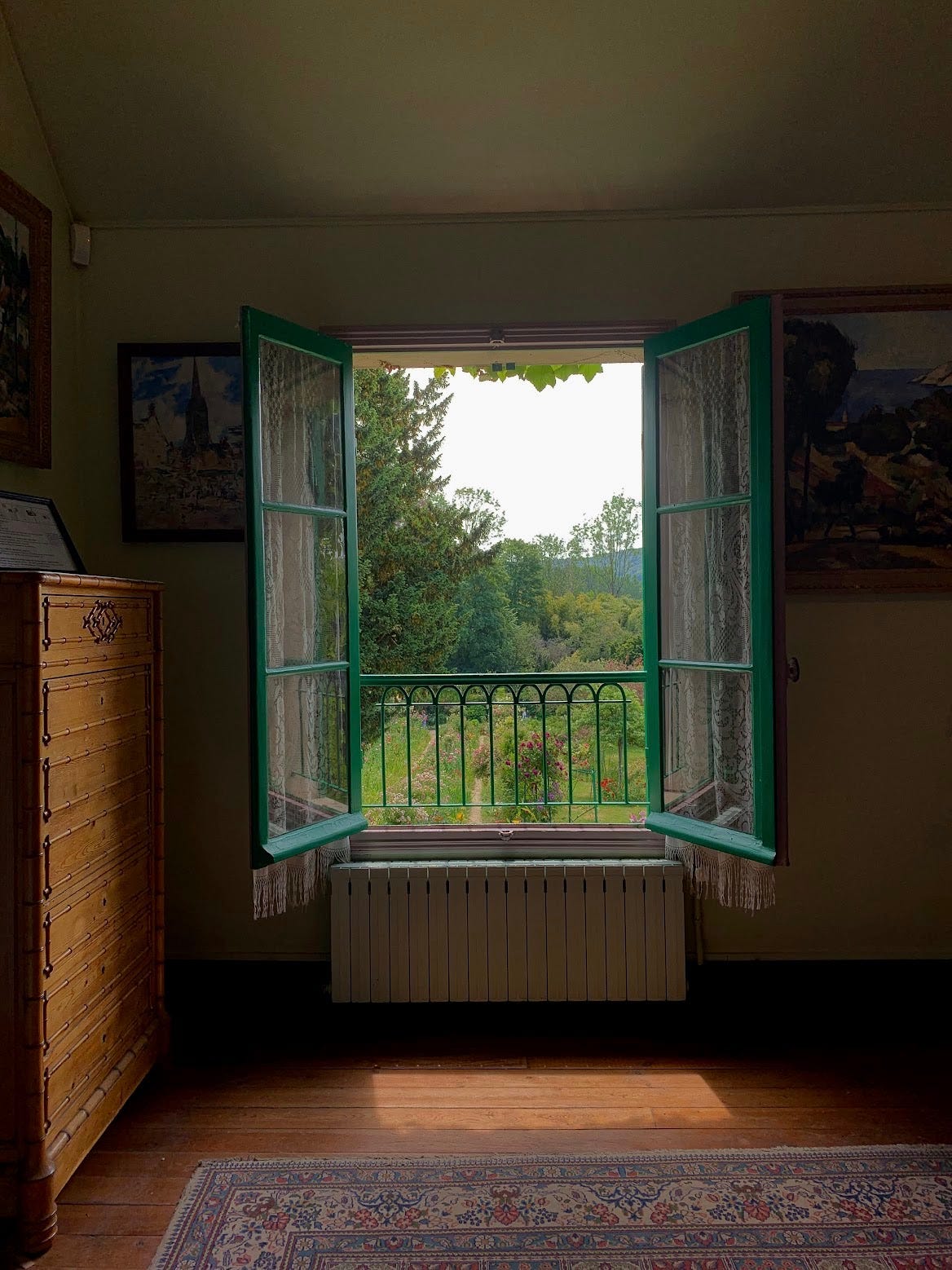
Psalm 139:12 says, “Even the darkness is not dark to you, the night is bright as the day, for darkness is as light with you.”
To God, secrets are not secrets! God sees everything plainly in the light. God will guide you! Take it slow. Be gentle with yourself and others. Don’t be afraid. Believe in God’s omniscience, omnipotence, and benevolence.
God has shown me that all of this reading and learning is just information, and I am still free to choose how to act on what I see, what I hear, what I feel, and what I experiment upon. I honor the God Who Knows All Things by being willing to know all things. With a sigh of relief, I can say I am not afraid of learning anything anymore. I am free. I feel free!!!!!! What a gift.

P.S. For my subscribers… last call to join the mail club in time to receive July’s mail! Sign up here! So grateful for all who have joined already <3
Below, you will find this week’s Sunday Somethings. This is where I share my recommendations, insights, and favorites for the week. Have something you’d like to share, too? I’d love to hear from you in the comments and in the community chat!


[all the time I pray to Buddha]
by Kobayashi Issa, translated by Robert Hass

All the time I pray to Buddha
I keep on
    killing mosquitoes.


An easy and delicious salad — the La Stralla Salad! I made this a few weeks ago for a get-together, and now I’m making it to share at my family reunion! Filling, quick, and yummy!

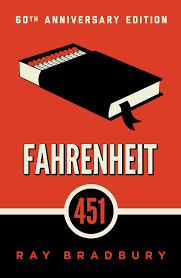
Working on this essay this week has reminded me of one of my favorite books to teach, Farenheit 451. It’s a classic for a reason — and if you find yourself in the deconstructed-religion-space, you will be amazed at how much this story resonates.
It’s not so much about learning why this dystopian city is burning books as it is about learning to question the structures and authority around you. It’s main theme is about choosing knowledge over ignorance. It’s a really interesting book, and when you think about the fact that it is written in the 1950s…. it’s mindblowing at how prophetic it is about the world today. I think it is one worth re-reading.

This nun podcast is so wholesome and so cute. I haven’t listened to an episode, but I love to watch these clips. Sister, yesssss!
Thank you, thank you for reading Something for Sundays! If you enjoyed this post, please share with someone you know who might enjoy it too! ♥
You might also enjoy…
My thoughts about cults
Different ways of praying
30 years worth of life lessons that nobody asked for
Seeing the sacred in the ordinary
Learning to trust (because what other choice do we have, really?)
Why some things will never be the same post faith deconstruction
Rough Stone Rolling did it for me. It opened my eyes to the fact these men are simply human like me, that they responded to their own conditioning. But I could not trust them as they refused to be in integrity with the truth. It was a relief to look outside church-approved sources and encounter the beautiful wisdom found in other religions and philosophies. I could not stay.
Your story is so powerful, thank you for sharing.. I did not grow up in a Mormon cult - only with the purity culture mixed with a very conservative environment. But I've had similar revelations upon doing research and sadly finding out how even the founders recantes their beliefs.. It's also the first time I hear of the shelf breaking and what a perfect metaphor to describe this. Thank you for sharing!